
Why Is Pax Silica So Controversial in the Philippines?
Why I support the opportunity, take the criticism seriously, and want the Philippines to aim higher in the AI economy.

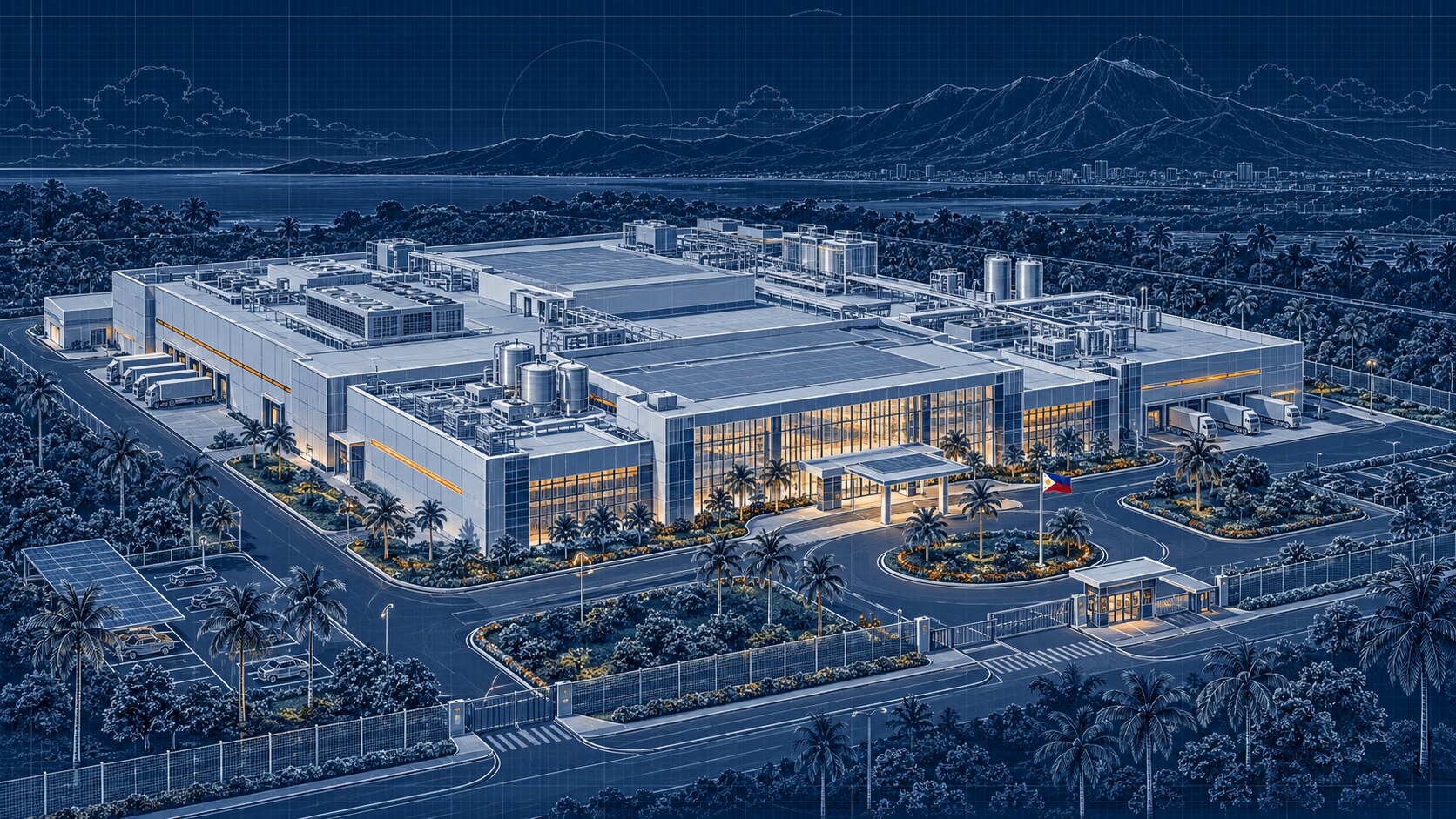
Imagine the Philippines ten years from now. A Filipino engineer can build a career in advanced manufacturing without treating migration as the only serious route forward. A local supplier wins an international contract because it meets a demanding technical standard. A graduate joins a team that develops, tests, or improves technology used around the world.
That is the future I want to see when I hear about Pax Silica.
It is also a future that no signing ceremony can promise us.
I support Philippine participation in Pax Silica because I see an opening to connect investment, infrastructure, technical skills, and business opportunity. My background in civil engineering, AI-related work, and business shapes that view. I am interested in what the Philippines could learn to build, operate, and eventually develop for itself.
But support has to survive difficult questions. Who gets the jobs? Who supplies the factories? Who pays for the supporting infrastructure? What happens to people already living and working around a proposed development? What obligations will investors actually accept?
Those questions help explain why Pax Silica attracts scrutiny. They should also help define a stronger case for it.
My position is straightforward: the Philippines should pursue this opportunity with ambition, clear terms, and measurable benefits for Filipinos.
What Pax Silica actually is
Pax Silica is a United States-led initiative focused on technology supply chains and economic security. Its declaration covers cooperation across areas including semiconductors, software, advanced manufacturing, energy, mineral processing, and logistics. It also emphasizes private investment, reliable partners, and reducing excessive dependence on particular suppliers. The original declaration was signed in December 2025. Read the declaration published by Australia's Department of Industry, Science and Resources.
For the Philippines, a major proposed project is an industrial hub of roughly 4,000 acres, or 1,620 hectares, in New Clark City, Tarlac. Plans were announced alongside the country's entry into Pax Silica in April 2026. Reuters reported the announcement on 17 April.
There are two levels here: the international initiative and the specific Philippine projects that might proceed under it. Supporting participation does not require accepting every possible project or contractual term. Each investment still needs to justify its costs, location, design, and public benefits.
As of the latest reporting checked for this article, the Clark framework was still being negotiated. On 15 September 2026, The Philippine Star reported that officials were targeting a November signing and describing the hub's intended focus as advanced manufacturing, semiconductors, electronics, precision engineering, and automation. A target signing date is not a completed agreement. Read the September update.
That distinction matters when evaluating both enthusiastic promises and alarming predictions. We should judge the actual proposal as it develops.
Why the scrutiny runs so deep
It would be easy for a supporter to say that critics simply do not understand technology. I think that would weaken the argument.
People can understand a technology and still question the terms under which it arrives. An impressive factory can coexist with a poor agreement. A worthwhile national objective can be pursued through a badly designed project. Taking those possibilities seriously is part of being responsible about development.
Sovereignty became a real point of dispute
The controversy over jurisdiction was not invented out of nothing. In May, BCDA's chief said the Philippines had rejected a US request involving American jurisdiction and diplomatic immunity. A US official subsequently disputed how the immunity issue had been reported. Philstar's account also noted that the publicly available declaration and BCDA proposal letter did not themselves grant such immunity. Read Philstar's reporting on the conflicting accounts and public documents.
For me, that is a reason to demand clear, published operating terms. Supporters should want an agreement that can withstand examination. Investors benefit from certainty, and citizens deserve to know who can enforce the rules when something goes wrong.
I would want answers about inspections, dispute resolution, environmental liability, and remedies for workers and affected communities. Those are practical questions about how the project would function.
Communities are asking what happens to them
Scientists' group AGHAM has challenged official assurances about the project's effects on farmers and Indigenous communities, including possible loss of livelihoods and pressure on water resources. These are the group's concerns, rather than findings that every predicted impact will occur. The Philippine Star reported AGHAM's objections in July.
Imagine being asked to support a national development project before you understand what it means for your farm, your water supply, or your family's income. A national investment figure would not answer your immediate questions.
My support for Pax Silica includes an expectation that affected people can participate meaningfully, see the relevant plans, and obtain fair remedies where harm occurs. The quality of that process should matter as much as the quality of the promotional presentation.
People want benefits they can recognize
To a policymaker, success might look like an investment announcement. To an engineer, it could mean a role with technical depth and a path to promotion. To a parent, it might mean a child can find stable work closer to home. To a small business, it could mean access to a contract that was previously out of reach.
I think skepticism becomes more understandable when we recognize those different tests of success. A project may attract capital without distributing opportunity widely. That is why supporters should ask how the economic benefits reach households and local enterprises.
There is also no need to assume that public criticism represents every Filipino's view. The debate contains different concerns, different interests, and people who are still deciding what they think.
The engineering reason I see an opportunity
My civil engineering background makes me pay attention to the systems beneath an industrial project: access roads, drainage, structural performance, utility connections, construction quality, maintenance, and the movement of people and goods.
An industrial hub will be judged over years of operation. Attractive buildings are only part of the task. A facility has to remain usable through maintenance cycles, supply interruptions, heavy rain, equipment changes, and the everyday demands of production.
The OECD's 2026 survey of the Philippines identifies high electricity costs and infrastructure constraints as obstacles to manufacturing development. That supports a practical point: a technology initiative has to address the conditions that allow businesses to operate competitively. Read the OECD's economic assessment.
This is where I see potential for engineers and technical professionals. If projects proceed, designing and maintaining the supporting systems could create opportunities across disciplines. The useful questions would concern the actual facilities, procurement requirements, staffing plans, and training arrangements. No particular job should be treated as guaranteed just because a hub has been announced.
I would also ask whether infrastructure improvements benefit the surrounding area. Can workers reach the site affordably? Can suppliers move goods efficiently? Does the drainage design account for neighboring communities? Is maintenance funded over the life of the project?
Those details might sound less exciting than artificial intelligence. They are precisely the details that could turn a technology ambition into something durable.
What my AI perspective adds
Working around AI makes me interested in the difference between using a tool and developing the capability to evaluate, adapt, and improve the systems behind it.
I want more Filipinos to have access to that second kind of work. That includes people who can inspect outputs, test reliability, improve processes, understand operational risks, and connect technical decisions to real business needs.
The employment discussion also needs care. A 2025 IMF working paper estimated that about 36% of Philippine workers held jobs highly exposed to AI. Around 61% of that exposed group was also assessed as having high complementarity with AI, suggesting scope for technology to support their work. Exposure is therefore not a forecast that all those jobs will disappear. Read the IMF working paper.
My conclusion is that the Philippines should expand the range of work its people can do as technology changes. Pax Silica could contribute if it leads to meaningful training and more technically demanding activity. It cannot substitute for education reform, accessible skills development, or the work businesses must do to prepare their employees.
Nor would an industrial hub automatically solve disruption in service-sector jobs. A worker cannot move into a different technical occupation through enthusiasm alone. Training takes time, living expenses continue, and employers need credible ways to recognize newly acquired skills.
That is why I would look for paid training, practical placements, recognized qualifications, and clear hiring routes. The human transition deserves as much planning as the physical development.
The business opportunity is bigger than a headline investment figure
From a business perspective, the most interesting question is what Philippine enterprises could become capable of supplying.
Consider an illustrative example. A Filipino fabrication business has the equipment and experience to make a component, but cannot yet meet an international buyer's documentation and quality requirements. A useful supplier-development program could help it improve inspection procedures, process consistency, traceability, and delivery performance.
If that business then qualifies for additional customers, the benefit could extend beyond one industrial park. It has gained a commercial capability it can use again.
That is the kind of result I would want Pax Silica to encourage. Other possible opportunities could involve equipment maintenance, logistics, construction services, testing, software integration, or professional support. These are examples of opportunities to investigate, not a confirmed list of project contracts.
Local participation will need deliberate work. Small firms may struggle with certification costs, working capital, procurement visibility, and the time it takes a large customer to pay. An announcement that suppliers are welcome does not remove those barriers.
I would like to see clear supplier requirements published early, fair access to procurement, and technical assistance connected to real purchasing needs. Business relationships should give capable local firms a practical route to compete.
My measure of success would include how many Philippine businesses win repeat orders and improve their capabilities. That would tell us more than a photograph of executives signing a memorandum.
The strongest criticism supporters must answer
Here is the question I find hardest and most useful: what if the Philippines hosts a technology hub but gains too little knowledge, bargaining power, or lasting capability from it?
That possibility deserves a direct answer. A facility being geographically inside the country does not, by itself, tell us how much responsibility local teams will hold, what they will learn, or whether domestic firms will participate.
I would want a credible progression plan. What responsibilities could Filipino teams take on after their first year? What training prepares them for more advanced roles? Can local universities work with companies on defined technical problems? Will suppliers receive feedback that helps them improve?
Technology transfer should have a practical meaning. It might involve agreed training, licensed processes, research collaboration, or the development of local technical leadership. It does not mean assuming that foreign firms will hand over proprietary technology without a commercial arrangement.
Support also needs to leave room for judgment about individual projects. If a proposed investment offers weak local benefits or unacceptable costs, officials should be able to revise its terms or reject it. That flexibility would make participation more useful.
My confidence rests on the possibility of building those arrangements into the project. The agreement and its implementation will determine whether that confidence is justified.
Power, water, and land need specific answers
I do not think the words “high technology” settle an environmental question. Neither do I think the environmental demands of every technology facility are identical.
The broad Pax Silica declaration includes data infrastructure, but the September description of the proposed Clark hub emphasizes manufacturing. Those descriptions operate at different levels. We should avoid assigning the characteristics of a hypothetical giant data center to every possible facility in the zone. Compare the declaration with the latest reported Clark scope.
My expectation is simple: each proposed facility should come with information specific enough to assess it. I would want to know its expected electricity demand, water sources, treatment arrangements, waste handling, emergency plans, and effects on nearby users.
A promise to recycle water should be accompanied by a design and a measurable target. A promise of reliable electricity should explain the supply arrangements and who bears the cost. A commitment to protect communities should be reflected in decisions people can examine and challenge.
These are examples of the evidence I would seek, not conclusions from an engineering assessment of the proposed hub. A project at this stage cannot be evaluated responsibly from a slogan or a single rendering.
As a supporter, I want those questions answered early. They can reveal design problems while changes are still possible and help establish the project's credibility with the people who have the most at stake.
What would convince me that Pax Silica is working?
I would look for a public record of results over time. The following is my proposed scorecard, not a description of commitments already agreed by the parties.
| Area | Evidence I would want to see |
|---|---|
| Filipino careers | Actual hires, pay ranges, retention, promotions, and a distinction between temporary construction work and continuing operations jobs. |
| Skills | Funded training, completion rates, recognized qualifications, and graduates moving into relevant work. |
| Local enterprise | Purchases from Philippine suppliers, repeat contracts, payment performance, and firms qualifying for more demanding work. |
| Infrastructure | Delivered capacity, operating reliability, maintenance funding, and demonstrable benefits for surrounding users. |
| Community interests | Meaningful consultation, documented impacts, accessible complaints processes, and remedies that people actually receive. |
| Environmental performance | Published monitoring appropriate to each facility, enforceable commitments, and action when performance falls short. |
| Public value | Clear costs and incentives, transparent agreements, and credible reporting on the benefits delivered. |
Government and investors could propose different measures. The essential point is to agree on meaningful ones before everyone starts declaring success.
Projected investment and employment figures should remain visibly labeled as projections. They can help explain an ambition, but they are different from money already spent, facilities operating, and people receiving paychecks.
What I mean when I ask Filipinos to keep an open mind
I mean being willing to investigate an opportunity before deciding it has nothing to offer.
An open mind also means listening when a farmer identifies a livelihood risk, when an engineer questions an infrastructure assumption, or when a business owner asks how local firms will qualify. People bring different knowledge to the same proposal.
I do not need every critic to become a supporter. I would rather have a more demanding conversation in which people can explain what evidence would change their view. That standard should apply to me, too.
The national interest, as I see it, is to leave the Philippines with stronger capabilities and more choices. International partnerships can help us pursue that objective when we understand what we contribute, what we receive, and what responsibilities we retain.
There is a cost to poorly negotiated participation. There can also be a cost to letting worthwhile opportunities pass without doing the work to evaluate them. A serious discussion should examine both.
Why I remain pro-Pax Silica
I support Pax Silica because it could connect several things I care about: engineering that works, technology people can use productively, businesses that grow through capability, and careers that give Filipinos more room to advance.
I am not treating a proposed hub as a finished success. My support is for pursuing the opportunity and doing the difficult work required to make it worthwhile.
The future I described at the start would depend on thousands of decisions: the training budget, the supplier contract, the drainage plan, the way a complaint is handled, the technician who gets promoted, and the local firm trusted with a more demanding assignment.
Those decisions are where the national promise becomes personal.
If Pax Silica helps more Filipinos do meaningful technical work, build competitive enterprises, and shape the technologies we rely on, I believe it will have been an opportunity worth pursuing. I want us to be ambitious enough to try and disciplined enough to judge the results honestly.
What would you need to see before calling Pax Silica a success for the Philippines: better careers, stronger local businesses, reliable infrastructure, or something else?
Questions readers often ask
Is Pax Silica already a completed project in the Philippines?
No. Joining the international initiative and completing a local industrial development are different milestones. As of the 15 September reporting used here, officials were still targeting a November 2026 framework agreement for the Clark hub. Source: The Philippine Star.
Does supporting Pax Silica mean accepting every proposed term?
In my view, no. Participation should allow the Philippines to evaluate projects individually and insist on terms that serve its interests. A supportive position can include firm expectations about transparency, community interests, and local benefits.
Will Pax Silica guarantee jobs for Filipino engineers or AI workers?
No individual job is guaranteed by an announcement. Opportunities will depend on which investments proceed, their actual operations, and their recruitment and training plans. I would watch for confirmed employers and specific vacancies before making career decisions around the hub.
Can scrutiny help a project succeed?
I believe it can. Specific, evidence-based questions can improve designs and agreements. Supporters and critics can both contribute by distinguishing established facts, proposals, projections, and their own judgments.
Gerald Apostol writes about engineering, AI, business, and the practical choices shaping work and development in the Philippines. This article presents his personal perspective. Factual statements link to their sources; examples, recommendations, and the scorecard are the author's analysis.
Let’s keep the conversation thoughtful.
Have a different perspective or a source worth reading? Send me a note. You can also explore the engineering work and professional experience behind this blog.